Back to Blogs

What Is Full Arch Restoration and Who Is a Good Candidate?

Missing teeth? Full arch restoration replaces an entire arch of teeth with a permanent, stable bridge attached to dental implants, improving oral health and confidence.

July 10, 2026
2 min read
Eric, in a rust turtleneck, on a sunlit balcony, tests a green leaf against his new dental restoration.
Back to Blogs

What Is Full Arch Restoration and Who Is a Good Candidate?

Eric, in a rust turtleneck, on a sunlit balcony, tests a green leaf against his new dental restoration.

Missing teeth? Full arch restoration replaces an entire arch of teeth with a permanent, stable bridge attached to dental implants, improving oral health and confidence.

July 10, 2026
2 min read

Regaining a Confident Smile

Full arch restoration offers a transformative solution for individuals missing most or all of their teeth in an arch, providing a stable, natural-looking, and permanent alternative to traditional dentures. It involves replacing an entire arch of teeth with a bridge attached to dental implants surgically placed in the jawbone. This comprehensive approach can dramatically improve quality of life and oral health.

Eric, a man in his early 50s, had long struggled with the discomfort and self-consciousness of failing and missing teeth. Everyday activities like eating his favorite foods and laughing openly had become a source of anxiety. He dreamed of a permanent solution that would allow him to live life more fully.

His desire for a stable, integrated smile brought him to The Dental Method in Dallas, seeking answers for his complex dental situation. Dr. Daniel Stegall understands the profound impact such challenges have on a person's daily well-being. Eric was ready to explore options for a full mouth dental implant solution.

Eric, looks with a hopeful expression at a pamphlet titled "Full Arch Restoration" while sitting in a modern dental waiting room.

What Is Full Arch Restoration?

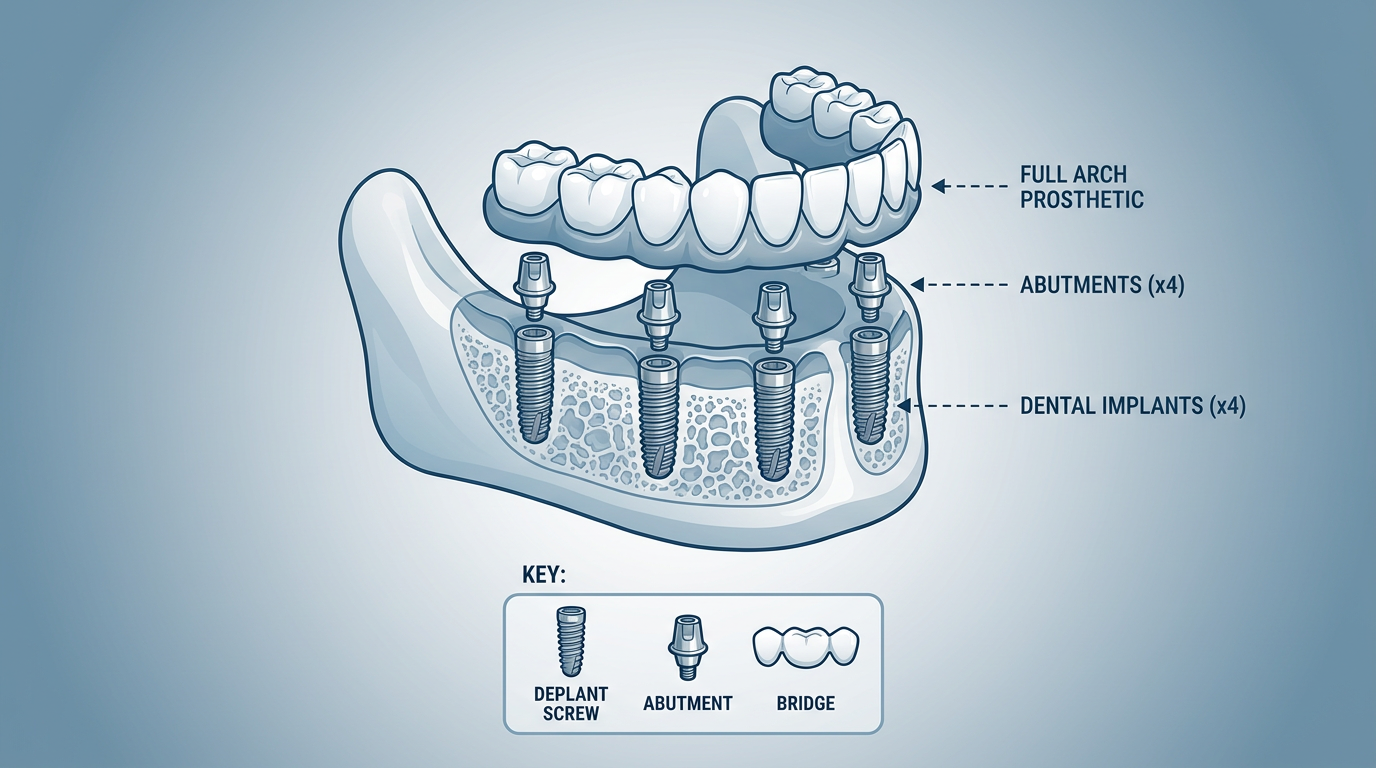
Full arch restoration is a sophisticated dental procedure designed to replace all teeth in either the upper or lower jaw, or both, using a series of strategically placed dental implants. Unlike conventional removable dentures, full arch restoration provides a fixed, non-removable set of teeth that function much like natural teeth. This restoration typically involves a minimal number of implants, often four to six, to support a full arch bridge.

For Eric, the distinction between removable dentures and a permanent solution was crucial. He had seen relatives struggle with ill-fitting dentures and wanted something more secure. Dr. Stegall explained that the implants integrate with the bone, creating a stable foundation.

  • Implants Placed: Strategically positioned dental implants are surgically inserted into the jawbone.
  • Healing Period: A crucial time allows implants to fuse with the bone, a process called osseointegration.
  • Provisional Bridge: Often, a temporary bridge is placed, allowing function during the healing phase.
  • Final Restoration: Once healed, a beautiful, custom-designed permanent bridge is securely attached to the implants.
A detailed diagram showing the anatomy of a full arch restoration with dental implants.

Am I a Candidate for Full Arch Implants?

Determining if one is a good candidate for full arch implants involves a thorough evaluation of oral health, bone density, and overall medical history. Generally, good candidates are individuals who are missing most or all of their teeth in an arch, possess adequate jawbone structure, and are in good general health. Dr. Stegall emphasizes that while bone density is important, techniques like bone grafting can often address deficiencies.

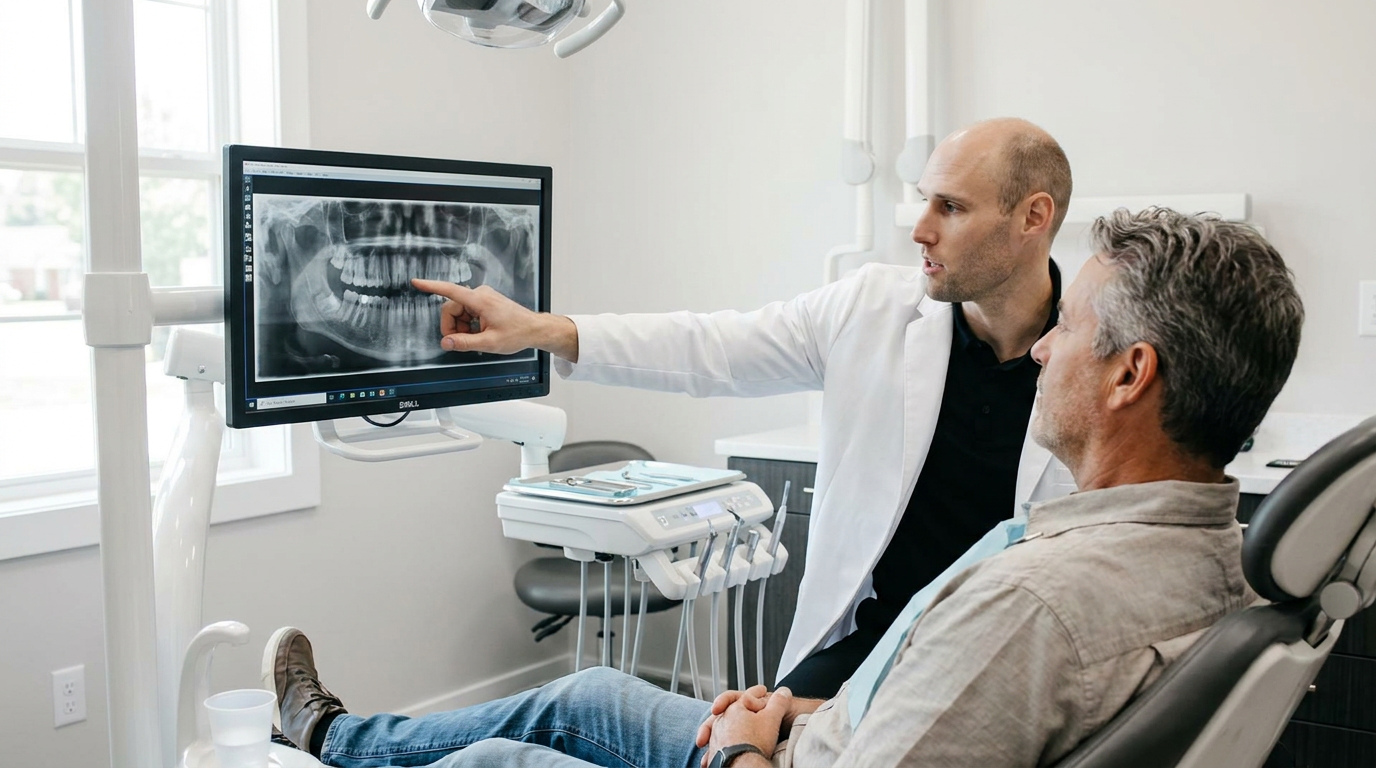
Eric's primary concern was whether his years of dental issues had compromised his candidacy. Dr. Stegall conducted a comprehensive examination, including advanced imaging, to assess his jawbone density and general oral condition. He carefully reviewed Eric's medical history to ensure there were no contraindications.

  • Missing Multiple Teeth: Ideal for patients with extensive tooth loss in an arch.
  • Adequate Bone Density: Sufficient jawbone is needed to anchor the implants; grafting can sometimes supplement.
  • Good General Health: Chronic conditions need to be well-managed to ensure proper healing.
  • Commitment to Oral Hygiene: Patients must be willing to maintain rigorous oral care.
Dr. Daniel Stegall, a man in his 40s in a white lab coat, explains something on a digital x-ray of a jawbone to Eric, who is seated in a dental chair.

Full Arch Implants vs. Traditional Dentures

The fundamental difference between full arch restoration and traditional dentures lies in stability and function. Traditional dentures rest on the gums and can slip, cause discomfort, and require adhesive, whereas full arch implants are securely anchored into the jawbone, offering unparalleled stability. This provides a significant advantage for eating, speaking, and overall confidence.

Eric had experienced the limitations of traditional dentures firsthand through his grandmother, watching her struggle to eat certain foods. He explained to Dr. Stegall that he yearned for the ability to enjoy meals without worry. Dr. Stegall highlighted how the fixed nature of a permanent dentures solution mimics natural teeth.

With full arch implants, patients don't have to worry about their teeth shifting or falling out, which can be a major source of embarrassment and inconvenience. The secure fit also helps preserve jawbone integrity, preventing the bone loss often associated with conventional dentures. This stability leads to a more comfortable and natural biting force, allowing for a broader range of food choices.

A close-up shot of a hand holding a traditional removable denture beside a clear glass containing two dental implants, emphasizing the contrast in stability and integration.

Ready for a Transformative Smile?

If you are missing multiple teeth or an entire arch, full arch restoration could be the life-changing solution you need. Schedule a consultation with Dr. Daniel Stegall at The Dental Method in Dallas to discuss your options and determine if you are a candidate. His expertise will guide you toward a healthy, confident smile.

All-on-4 or Other Full Arch Options?

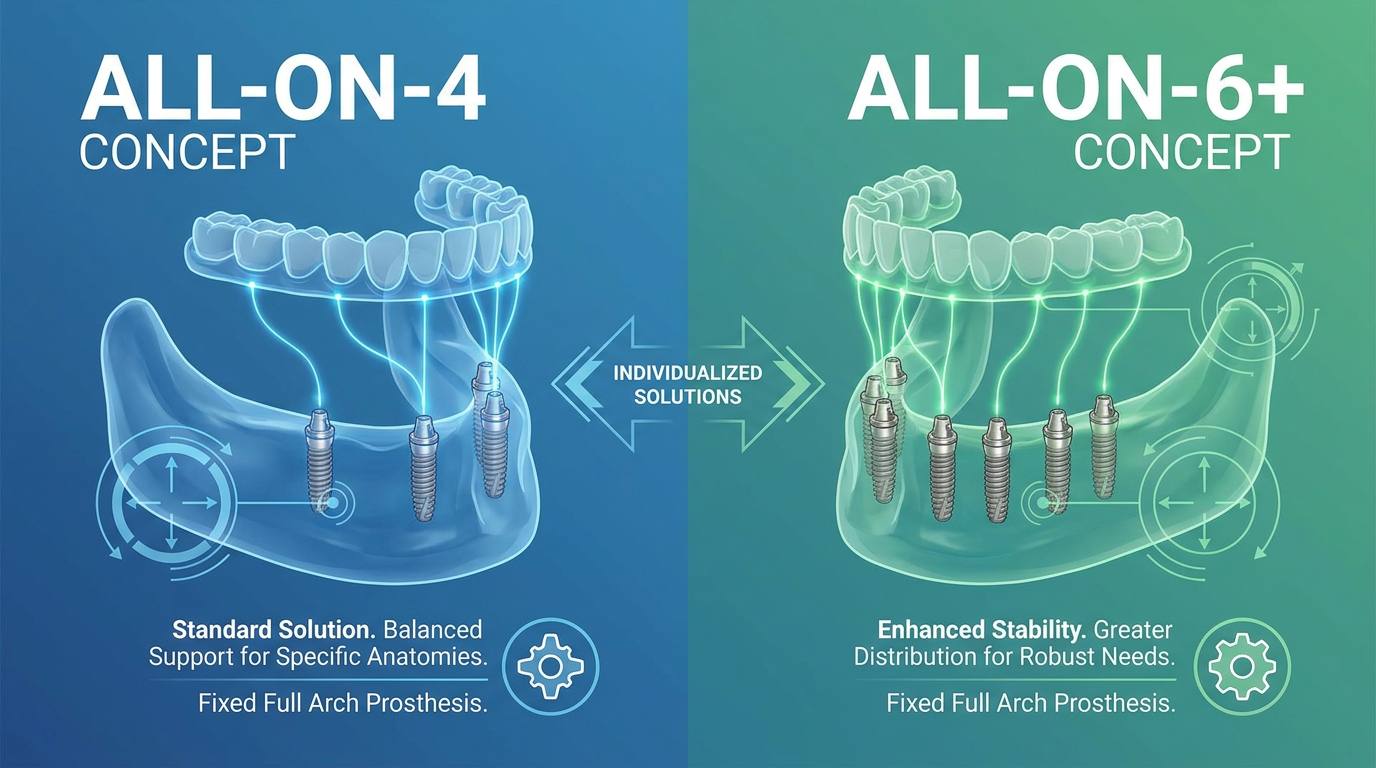
While "All-on-4" is a well-known technique, it represents just one approach within the broader category of full arch restorations, often using four implants to support a full bridge. Other methods might utilize six or even eight implants per arch, depending on individual bone structure and the specific needs for support and distribution. The choice between these options is highly customized. Dr. Stegall uses his expertise to determine the optimal number and placement of implants.

During his consultation, Eric had heard the term "All-on-4" before and wondered if it was the only option. Dr. Stegall clarified that while All-on-4 is an effective and common method, the best solution for Eric would depend on his unique bone structure and long-term goals for his dental implants. A personalized treatment plan was essential for his case.

Key Considerations for Selection:

  • Bone Quality: The density and volume of the jawbone heavily influence implant placement.
  • Occlusal Forces: The bite forces and chewing habits of the individual are assessed.
  • Patient Anatomy: Unique anatomical features of the jawbone dictate implant strategy.
  • Long-Term Durability: Maximizing support for the restoration is always a priority.
A split image depicting two different full arch implant configurations on stylized jaw models – one with four implants (All-on-4) and another with six implants, highlighting the variation in approach based on individual needs.

Understanding the Full Arch Restoration Process

The journey to a new smile with full arch restoration begins with a comprehensive consultation and detailed treatment planning. This initial phase involves advanced imaging, such as 3D CT scans, to precisely map the patient's oral anatomy and determine optimal implant placement. Next, the dental implants are surgically placed into the jawbone under local anesthesia or sedation. Following placement, a healing period, typically three to six months, allows the implants to integrate with the bone.

Eric felt reassured by the meticulous planning Dr. Stegall described. He appreciated learning about each step, from the initial scans to the final prosthetic fitting. Dr. Stegall emphasized that patience during the healing phase is crucial for the long-term success of the restoration.

After the integration period, custom-fabricated bridges are designed to fit perfectly and securely onto the healed implants. These prosthetics are crafted from high-quality materials to look and feel incredibly natural, completely transforming the patient's smile. The result is a fully functional and aesthetically pleasing set of teeth.

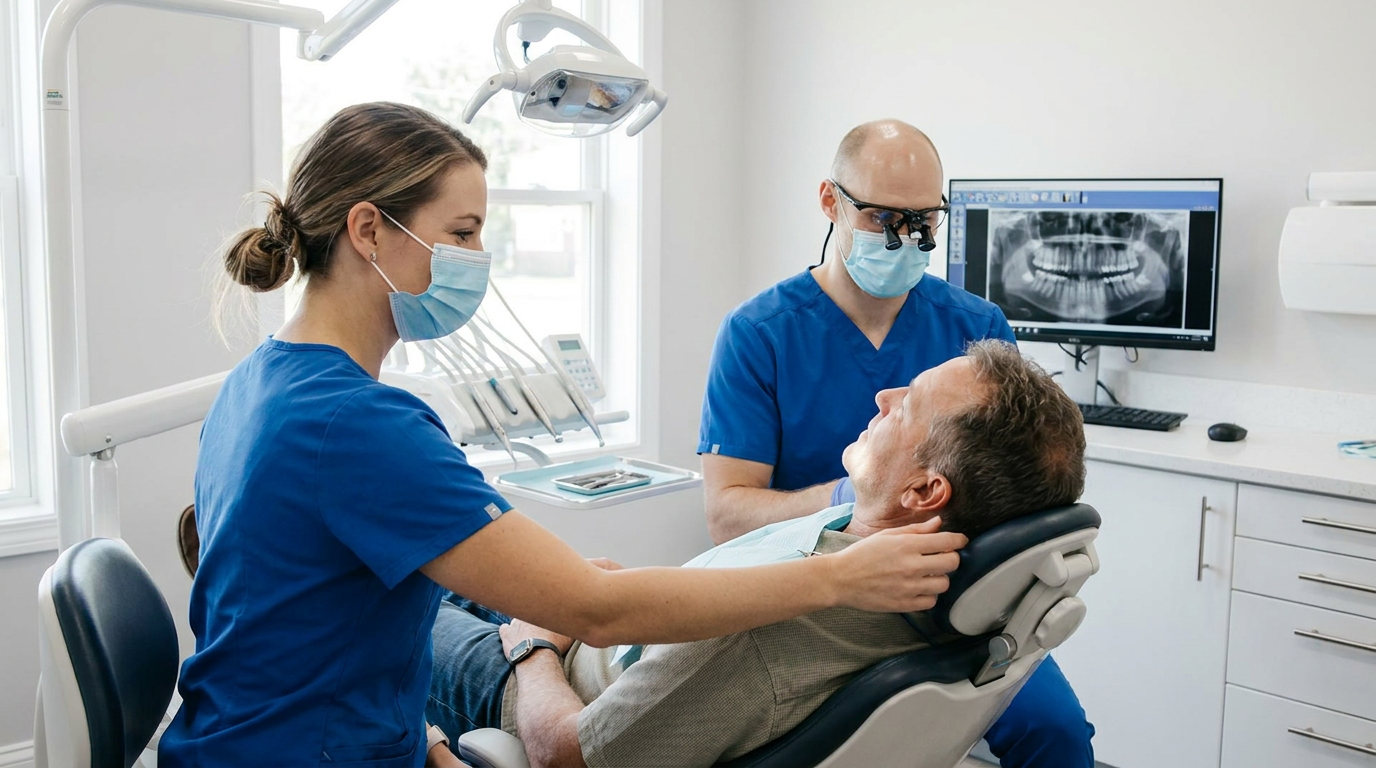
A dental assistant, a woman in her 30s wearing blue scrubs and a mask, gently helps Eric, recline in a dental chair.

Recovery and Long-Term Care

Recovery after full arch implant placement generally involves some swelling and discomfort in the days immediately following the surgery, which can be managed with prescribed pain medication. Patients are typically advised to consume soft foods for a period to allow for proper healing around the implant sites. Adherence to post-operative instructions is vital for a smooth recovery and successful osseointegration.

Eric was particularly interested in the recovery timeline, wanting to manage his expectations. Dr. Stegall explained that while individual healing varies, most patients return to normal activities within a few days, with full healing taking several months. Long-term care is straightforward but critical for prosthetic longevity.

Essential Long-Term Care Practices:

  • Daily Brushing: Regular brushing with a soft-bristled brush is imperative for oral hygiene.
  • Flossing and Water Picks: Meticulous cleaning around implants prevents plaque buildup.
  • Routine Dental Check-ups: Regular visits to Dr. Daniel Stegall are essential for professional cleaning and monitoring.
  • Avoid Hard Foods: While durable, avoiding extremely hard or sticky foods can extend the life of the restoration.
Eric, carefully brushes his new full arch dental restoration with a soft-bristled toothbrush in a brightly lit bathroom mirror.

A New Chapter of Confidence

For Eric, the decision to pursue full arch restoration at The Dental Method marked the beginning of a profound transformation. He had entered Dr. Stegall's office with years of dental insecurity and left with a comprehensive plan for a confident, functional smile.

The journey, while requiring commitment, promised to restore not just his teeth but also his ability to enjoy life without reservation. He envisioned once again savoring meals with his wife, Kristen, and speaking without hesitation at work meetings. The concept of a stable, permanent solution resonated deeply with his desire for normalcy and comfort. The team at the Dallas practice, under Dr. Stegall’s guidance, provided meticulous care and clear communication at every step.

After completing his full arch restoration, Eric’s transformation was remarkable. He could eat, speak, and laugh with a freedom he hadn't experienced in decades. This advanced approach to full arch restoration provided him with the durable, beautiful smile he had always dreamed of.

Eric, laughs genuinely with his wife Kristen, across a kitchen table filled with a healthy meal.

Frequently Asked Questions

1. What is full arch restoration?
Full arch restoration is a comprehensive dental procedure that replaces all the teeth in your upper or lower jaw (or both) with a permanent bridge securely attached to dental implants. It provides a stable, natural-looking alternative to traditional removable dentures, enhancing both function and aesthetics.

2. How long does a full arch restoration last?
With proper care and diligent oral hygiene, full arch restorations can last for many years, often a lifetime. The dental implants themselves are designed to be a permanent foundation, and the prosthetic bridge is durable and can be maintained or replaced if needed over time.

3. Is full arch restoration painful?
The surgical placement of the implants is typically performed under local anesthesia or sedation, so patients experience minimal discomfort during the procedure. Post-operative soreness and swelling are common but manageable with prescribed pain medication, and most discomfort subsides within a few days.

4. What is the difference between All-on-4 and other full arch options?
All-on-4 is a specific full arch restoration technique that uses four precisely angled implants to support a full arch of teeth. Other methods might involve more implants (six or eight) depending on bone density and individual patient needs. Dr. Daniel Stegall will recommend the best approach for each patient.

5. Can I get immediate teeth with full arch restoration?
In many cases, a temporary or "provisional" bridge can be placed immediately after implant surgery, allowing patients to have teeth during the healing period. This immediate load protocol depends on sufficient bone quality and careful assessment by Dr. Stegall to ensure successful integration.

6. How do I clean full arch dental implants?
Cleaning full arch implants requires regular brushing with a soft toothbrush, diligent flossing specifically designed for implants, and often using a water flosser to clean beneath the bridge. Regular professional cleanings and check-ups at The Dental Method are also essential for maintaining optimal oral hygiene and the longevity of your restoration.

GET IN TOUCH

Schedule Your Visit

Ready to experience luxury dental care? Contact us today to schedule your appointment.

  • LOCATION

    5757 W Lovers Ln #109,
    Dallas, TX 75209
  • PHONE

    (214) 227-6775
    Call us for appointments
  • EMAIL

    dallas@thedentalmethod.com
    We'll respond within 24 hours
  • HOURS

    Mon - Thu: 8:00 AM - 4:00 PM
    Fri: 8:00 AM - 3:00 PM
    Sat - Sun: Closed

Thank you for booking your appointment!

We’ve received your request and will contact you soon to confirm the details. We look forward to seeing you at The Dental Method.

Oops! Something went wrong while submitting the form.
RELATED BLOG POSTS

Stay Informed with Expert Insights & Tips About Dental Care

Tyler, in a navy crewneck, looks at his smartphone to schedule an appointment at his kitchen island.

What Is Aesthetic Dentistry? Services Near You

Unlock your best smile with aesthetic dentistry; learn how Dallas's expert Dr. Daniel Stegall crafts personalized, confident transformations.

7.10.2026
READ MORE
Jeremy sips coffee at a kitchen island, glancing at his reflection in his phone with a pleased expression at his bright smile.

Dallas Veneers Treatment, Costs & Results

Veneers offer a transformative solution for cosmetic concerns, addressing discoloration, chips, gaps, and misalignment for a dramatically improved and confident smile.

7.10.2026
READ MORE

Finding Your Best Cosmetic Dentist in Dallas

Discover your best smile with insights on selecting the top cosmetic dentist in Dallas, focusing on credentials & natural results.

6.2.2026
READ MORE