
Expert dental tips, news, and smile advice
How To Remove Tartar From Teeth Before It Becomes A Problem
Back to Blogs
February 10, 2026
•
5 min read
Share this post:








When You First Notice The Rough Spots
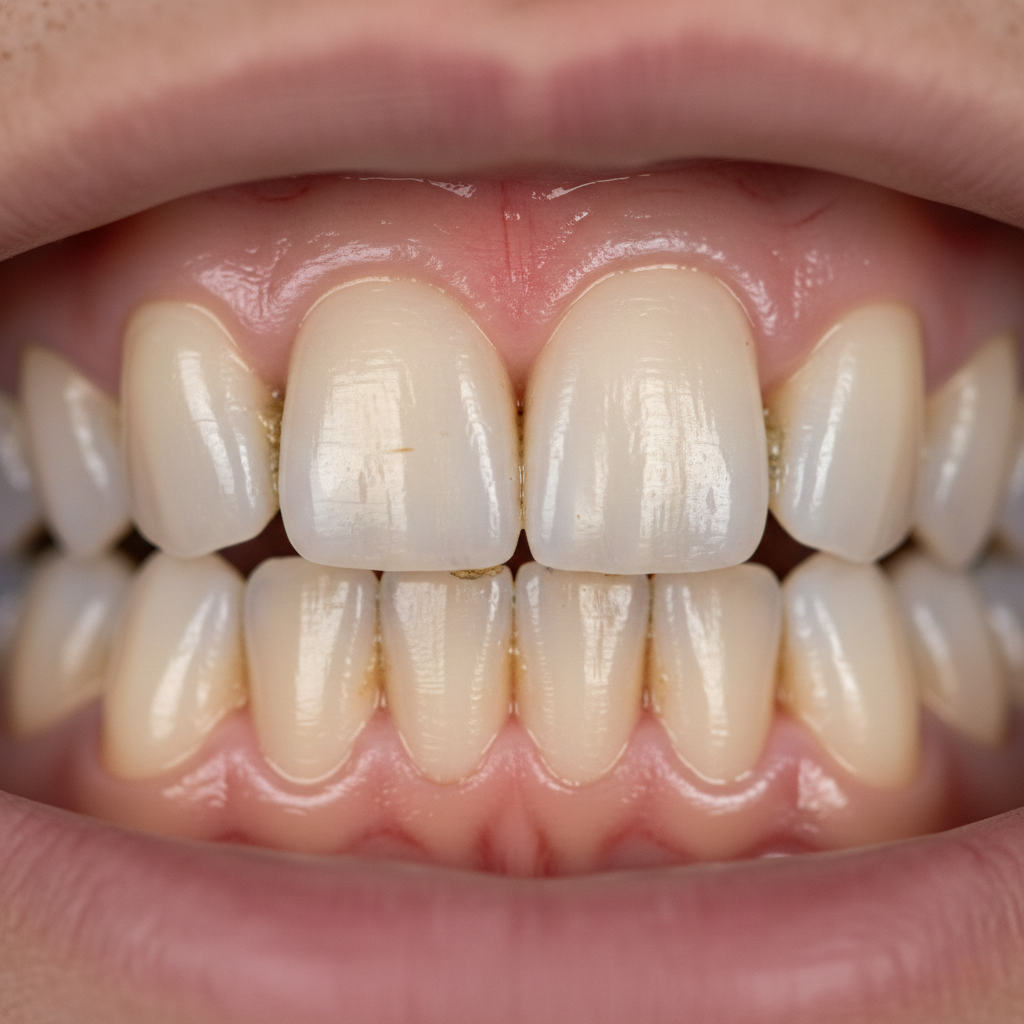
Mark noticed it while brushing one quiet Tuesday morning. That gritty, sandpaper feeling along his lower front teeth stopped him mid-brush. He rinsed, ran his tongue over it again, and felt the same stubborn buildup hugging the gumline. Mark is thirty eight, drinks coffee like it is a food group, and swears he brushes twice a day. So why did his teeth suddenly feel dirty even after brushing?
He leaned closer to the mirror, tilting his head under the bathroom light. The teeth looked mostly fine, maybe a little yellow near the gums, but nothing dramatic. Still, that roughness lingered. It felt permanent. That is often the first moment patients meet tartar, even if they do not know the name yet.
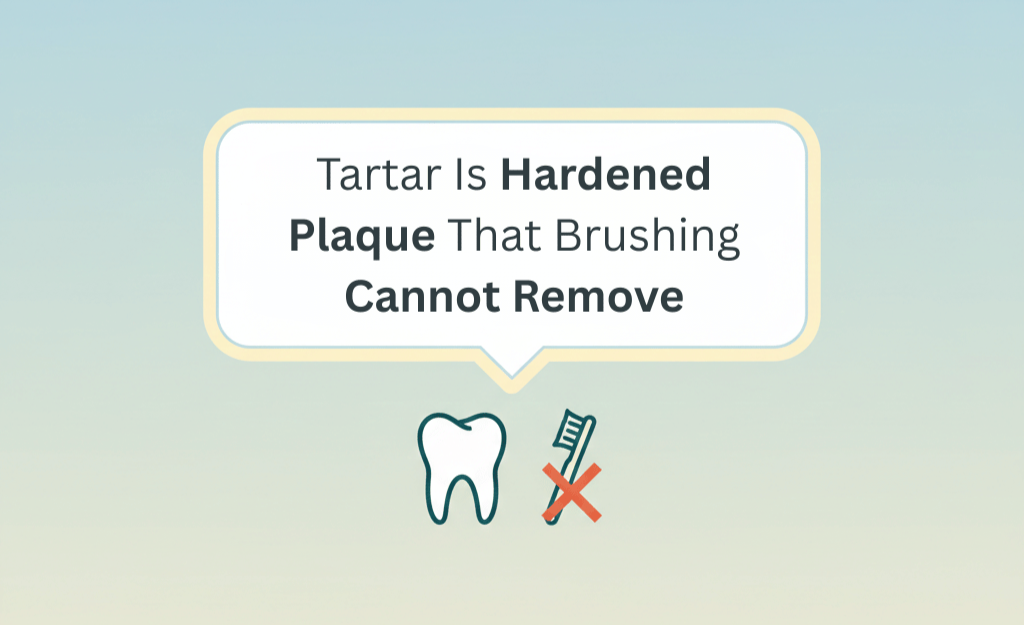
Tartar does not announce itself loudly. It sneaks in quietly, forming when plaque hardens and bonds to your teeth like cement. Once it is there, brushing alone cannot remove it. And the longer it stays, the more damage it can quietly cause.
What Tartar Really Is And Why It Sticks
Mark did what most people do next. He Googled. “How to remove tartar from teeth” popped up dozens of times, along with advice ranging from helpful to horrifying. Before you can remove tartar, it helps to understand what it actually is.
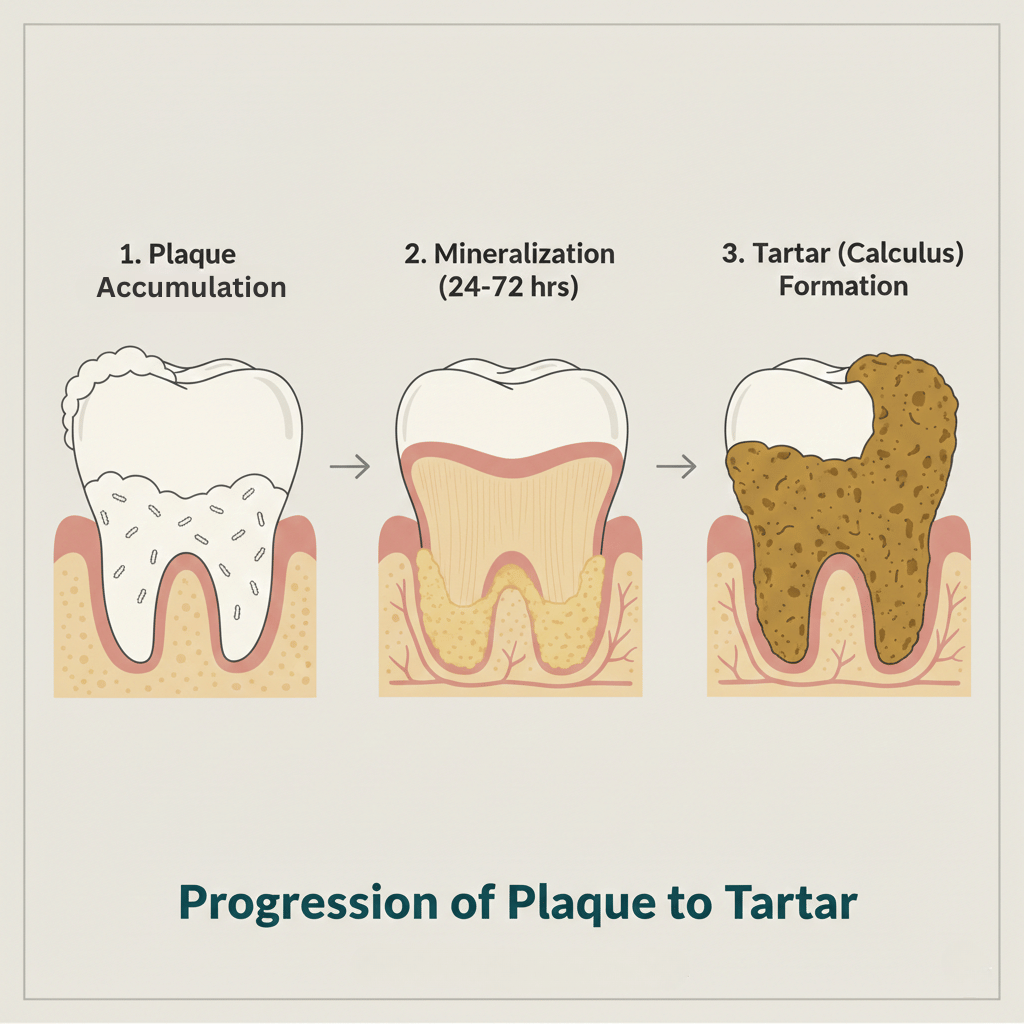
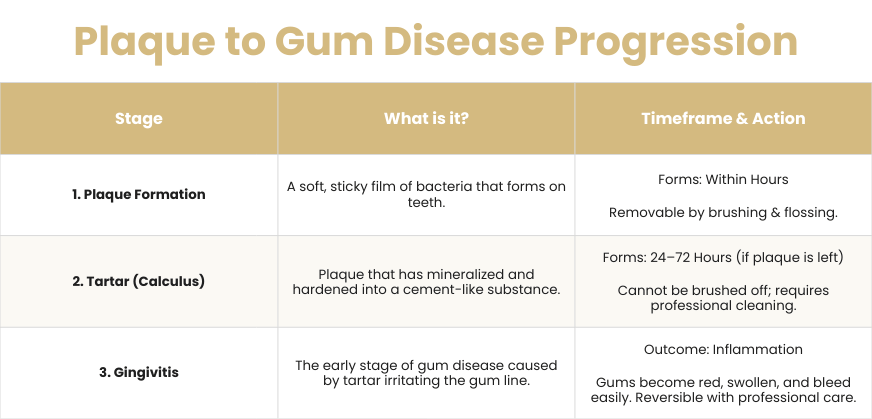
Plaque is soft, sticky, and full of bacteria. Think of it like wet snow. If you remove it quickly, it slides right off. But when plaque sits too long, especially near the gums, it absorbs minerals from your saliva and hardens. That hardened plaque becomes tartar, also called calculus. At that point, it is less like snow and more like ice frozen onto your teeth.
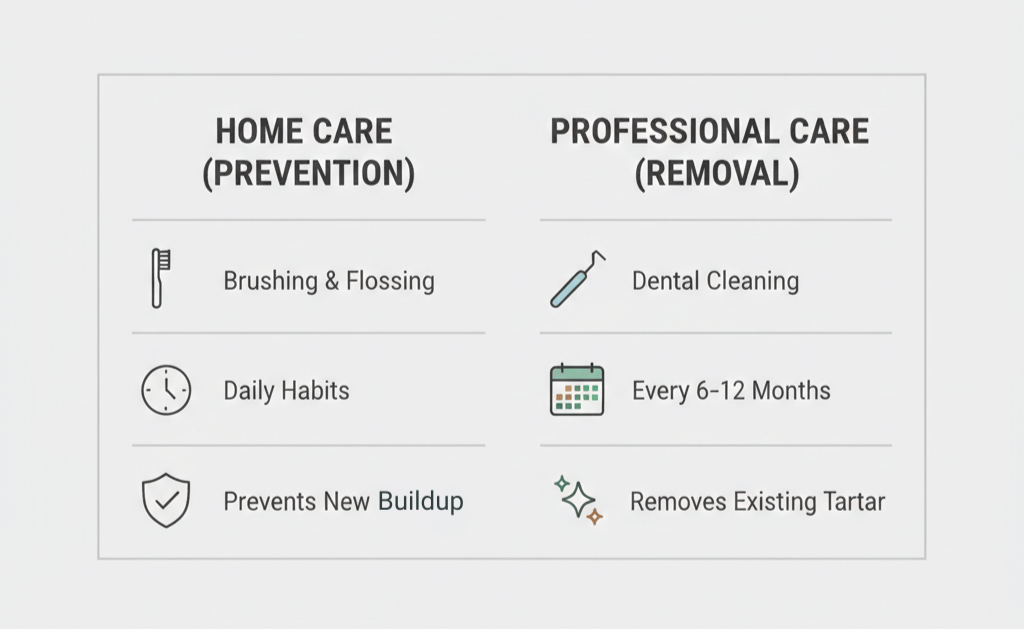
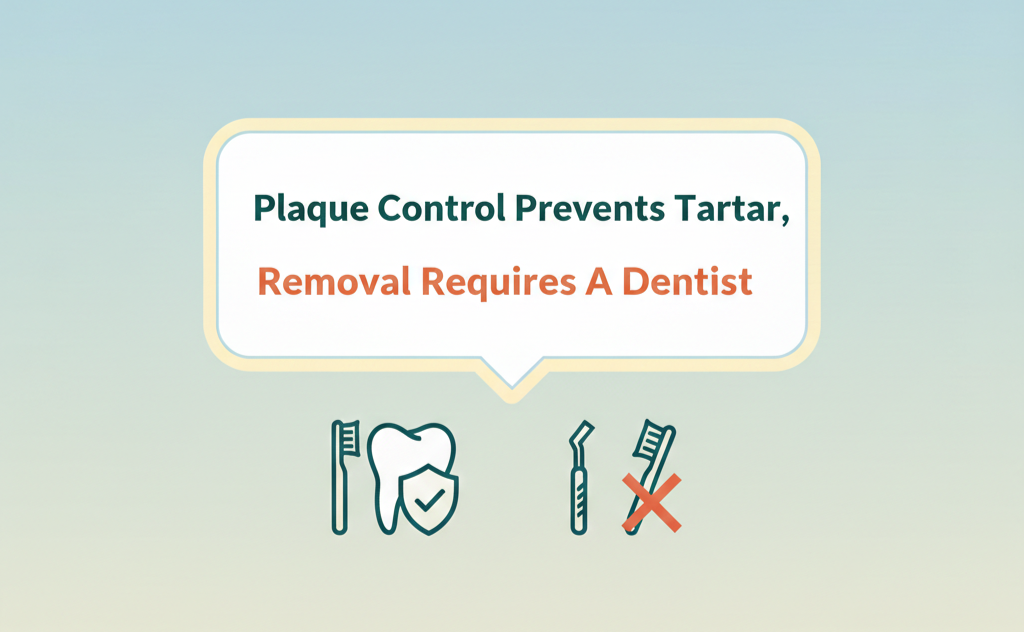
This is why tartar removal at home is so limited. No toothpaste or DIY hack can safely chip ice off enamel without risk. Once tartar forms, professional dental tools are required to remove it completely without damaging your teeth or gums.
The Myths Mark Almost Fell For
Scrolling through his phone, Mark saw advice that made his stomach tighten. Lemon juice. Baking soda scrubs. Metal tools ordered online. The promise was tempting, instant tartar removal at home, no dentist visit required.
Here is the truth we explain to patients every week. Scraping tartar yourself can permanently damage enamel and irritate gums, even if it seems to work at first. Acidic remedies like vinegar or lemon can erode enamel, making teeth more sensitive and more prone to future buildup.
One patient once told us it felt like sanding a scratch out of a car using gravel. You might remove something, but you leave the surface worse than before. Tartar removal is not just about getting it off, it is about protecting what is underneath.
What Actually Removes Tartar Safely
By this point, Mark realized this was not something he should experiment with. He scheduled a cleaning. During his visit, we explained exactly how tartar removal works and why it matters.
Professional dental cleanings use specialized instruments to gently break tartar away from the tooth surface, especially around the gumline where buildup loves to hide. This process is called scaling, and it is precise, controlled, and designed to protect enamel.
For heavier buildup, ultrasonic tools may be used. They vibrate tartar loose while flushing bacteria away with water. Patients often say it feels strange but satisfying, like power washing a sidewalk. The goal is smooth teeth that bacteria struggle to cling to again.
A Simple Check Can Stop Tartar Early
If Mark had ignored those rough spots, tartar could have crept deeper below the gums. That is where gum disease quietly starts. If you are feeling that same roughness or noticing stubborn plaque you cannot brush away, a thorough dental cleaning can make an immediate difference.

How Often Tartar Comes Back And Why
After his cleaning, Mark ran his tongue over his teeth and smiled. They felt slick, almost glassy. He asked the question everyone asks next. “How long will this last?”
Tartar can begin forming again in as little as twenty four to seventy two hours if plaque is not removed consistently. Some people naturally build tartar faster due to saliva chemistry, crowded teeth, or gum recession. Coffee, tea, and smoking can speed things up.
This does not mean you are doing something wrong. It means your mouth has its own personality. Regular cleanings every six months, sometimes more frequently, keep tartar from gaining a foothold again.

What You Can Do At Home That Actually Helps
Mark left with practical advice he could actually use. Not gimmicks, not hacks, just habits that work.
Brushing twice daily with a soft bristled brush angled toward the gumline disrupts plaque before it hardens. Electric toothbrushes can be especially effective for patients prone to tartar. Daily flossing removes plaque from areas brushes miss. Antimicrobial mouth rinses can help slow bacterial regrowth, though they do not remove tartar once formed.
The goal at home is prevention, not removal. Think of it as keeping snow from turning into ice.
When Tartar Starts Affecting More Than Your Smile
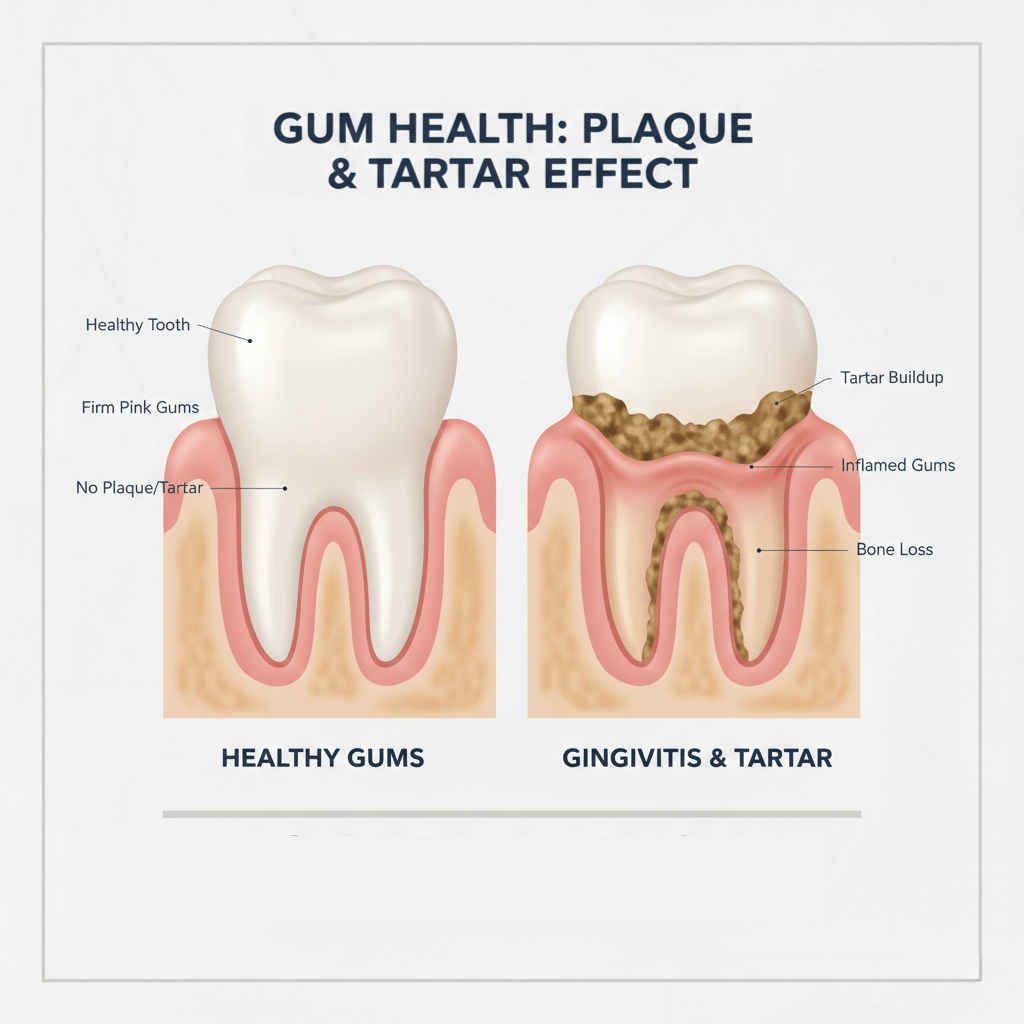
What surprised Mark most was learning tartar is not just cosmetic. Left untreated, it can inflame gums, deepen periodontal pockets, and even contribute to bone loss.
This is where we sometimes recommend deeper cleanings or additional periodontal care. If tartar has already caused gum irritation or infection, addressing it early can prevent much bigger problems later. Our general dentistry services are designed to catch these changes early, before they affect your comfort or confidence.
How Mark Felt After Taking Care Of It
A week later, Mark noticed something unexpected. He smiled more. His mouth felt cleaner throughout the day. Coffee did not cling to his teeth the same way. Brushing felt easier.
That rough spot that started the whole spiral was gone. More importantly, the anxiety around it disappeared too. Sometimes removing tartar removes worry along with it.
If you have been running your tongue along your teeth, wondering if that buildup is normal, the answer is simple. It is common, it is fixable, and you do not have to figure it out alone. You can explore exams and X rays if it has been a while since your last visit here:
Ready To Feel Smooth Teeth Again
Removing tartar is not about perfection. It is about comfort, health, and confidence. If something feels off, trust that instinct. A professional cleaning can reset things faster than you expect.
If you are ready to take that next step, our team at The Dental Method in Dallas is here to help you feel comfortable and informed. Schedule a visit through our contact page and let us take care of the hard part.
Categories:
Frequently Asked Questions
FAQ
1. Can tartar be removed without going to the dentist?
Once plaque hardens into tartar, it cannot be safely removed at home. Professional dental tools are required to remove it without damaging enamel or gums.
2. How long does tartar removal take?
Most routine cleanings take about forty five to sixty minutes. Heavier buildup or deeper cleanings may take longer or be split into multiple visits.
3. Does tartar removal hurt?
Most patients describe it as uncomfortable but not painful. Sensitive areas may feel tender, but the relief afterward is noticeable.
4. How much does tartar removal cost?
Routine cleanings are often covered by most major PPO insurance plans. Our team is happy to review your benefits and costs before treatment.
5. How can I slow tartar buildup between visits?
Consistent brushing at the gumline, daily flossing, and regular professional cleanings are the most effective ways to prevent tartar from returning.
GET IN TOUCH
Schedule Your Visit
Ready to experience luxury dental care? Contact us today to schedule your appointment.
LOCATION
5757 W Lovers Ln #109,
Dallas, TX 75209PHONE
(214) 227-6775
Call us for appointmentsEMAIL
dallas@thedentalmethod.com
We'll respond within 24 hoursHOURS
Monday - Friday
8:00 AM - 4:00 PM

Thank you for booking your appointment!
We’ve received your request and will contact you soon to confirm the details. We look forward to seeing you at The Dental Method.
Oops! Something went wrong while submitting the form.
RELATED BLOG POSTS
Stay Informed with Expert Insights & Tips About Dental Care
.png)
January 9, 2026
Thinking About Veneers At The Beginning Of The Year
Thinking about veneers this year but unsure if it’s the right time? One patient’s January decision might sound exactly like your own.
READ MORE